Water Damage Restoration in Everett, WA: Costs, Timeline and Insurance
Turning On · September 12, 2026 · 9 min read
It rarely announces itself. A supply line behind the washing machine gives up while you are at work, a water heater in the garage lets go overnight, or a slow drip under the sink finally shows itself as a soft spot in the floor. By the time most Everett homeowners call us, the water has already traveled somewhere they cannot see: into subfloor, wall cavities and insulation. What you do in the next few hours matters more than almost anything that happens afterward.
Turning On Restoration and Remodeling is an IICRC certified, licensed, bonded and insured restoration company based in Bellevue. We answer the phone 24/7, we run crews north to Everett and the rest of Snohomish County, and we bill your insurance directly, so you are not fronting the cost of emergency drying out of your own pocket. Call us any time at (425) 772-9467.
Why Everett Homes Hide Water So Well
Everett has an unusually wide spread of housing ages for one city. In Rucker Hill and Northwest Everett you are looking at homes built a century ago, many still carrying original cast iron drain lines and galvanized supply piping that has been quietly corroding for decades. East toward Silver Lake, Eastmont and Holly, the stock shifts to mid century ramblers and split levels sitting over vented crawl spaces. Both fail in their own way, and both conceal water well until it has done real damage.
Then there is the air. Everett sits on Port Gardner Bay, and marine air keeps relative humidity elevated through much of the year. Drying depends on how much additional moisture the surrounding air can still absorb, so a damp subfloor that would dry on its own in a dry climate frequently does not here. Materials stay wet, and wet materials inside a closed wall or a vented crawl space are exactly where a mold problem begins.
The First Hour: What You Can Do Before Anyone Arrives
Stop the water at its source if you can do it safely. Most Everett homes have a main shutoff where the supply enters the house, often in the garage, near the water heater, or at the crawl space access. If the source is a fixture, the angle stop under the sink or behind the toilet is faster. If water is anywhere near outlets or a panel, cut power to that area at the breaker before you step into it.
Then limit the spread. Pull up area rugs, lift furniture legs onto blocks or foil, and get anything paper, fabric or wood off wet flooring. Open interior doors so air can move between rooms, but resist opening every window: on a humid Everett afternoon you can bring in more moisture than you let out. Photograph everything before you move it, because those photos become the backbone of your claim.
What you should not do is assume a box fan and a few days will handle it. Surface water dries quickly and convincingly while the material underneath stays saturated. That gap between how a floor looks and what it actually holds causes most of the mold calls we take three weeks after a loss.
If you are looking at standing water right now, call us at (425) 772-9467. Our water damage restoration team is available 24/7, and we bill your insurance directly.
What Professional Restoration Actually Involves
The first thing a technician does on site is not extraction. It is measurement. We use moisture meters and thermal imaging to map where water actually traveled, which is almost never where the homeowner expects. Water follows framing and gravity, so a leak in an upstairs bathroom often turns up in a downstairs ceiling two rooms away, and that map sets the scope for everything that follows.
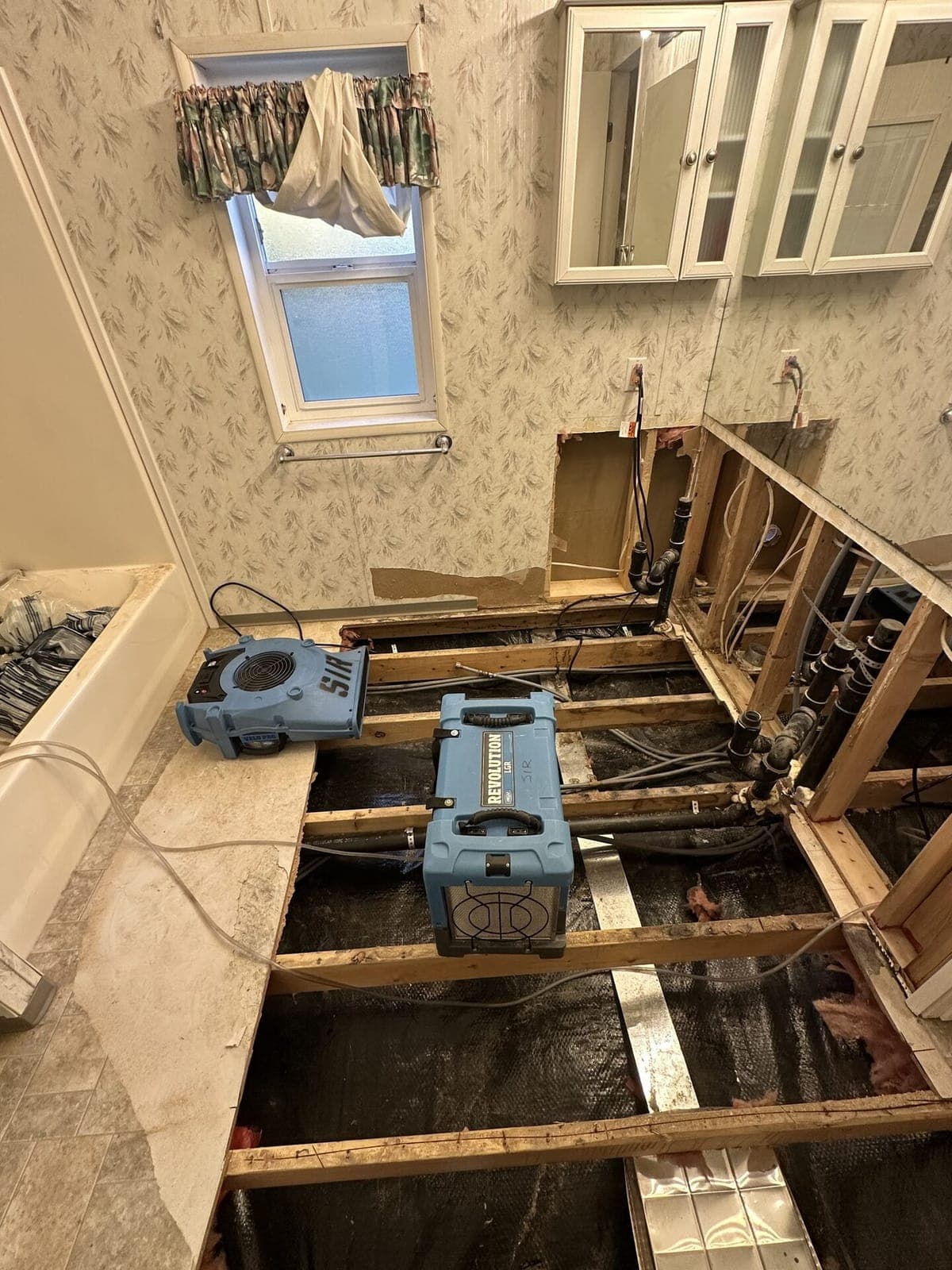
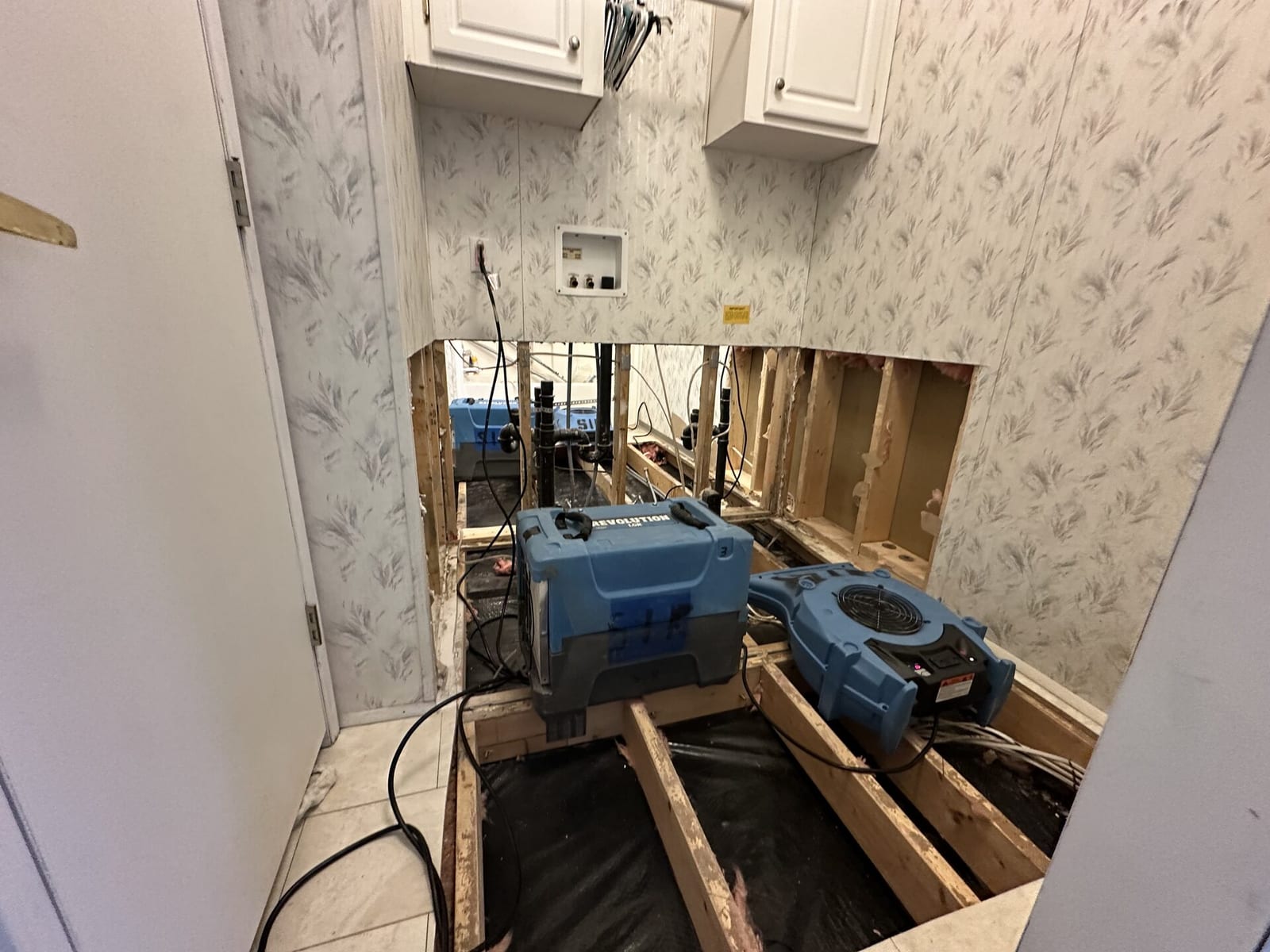
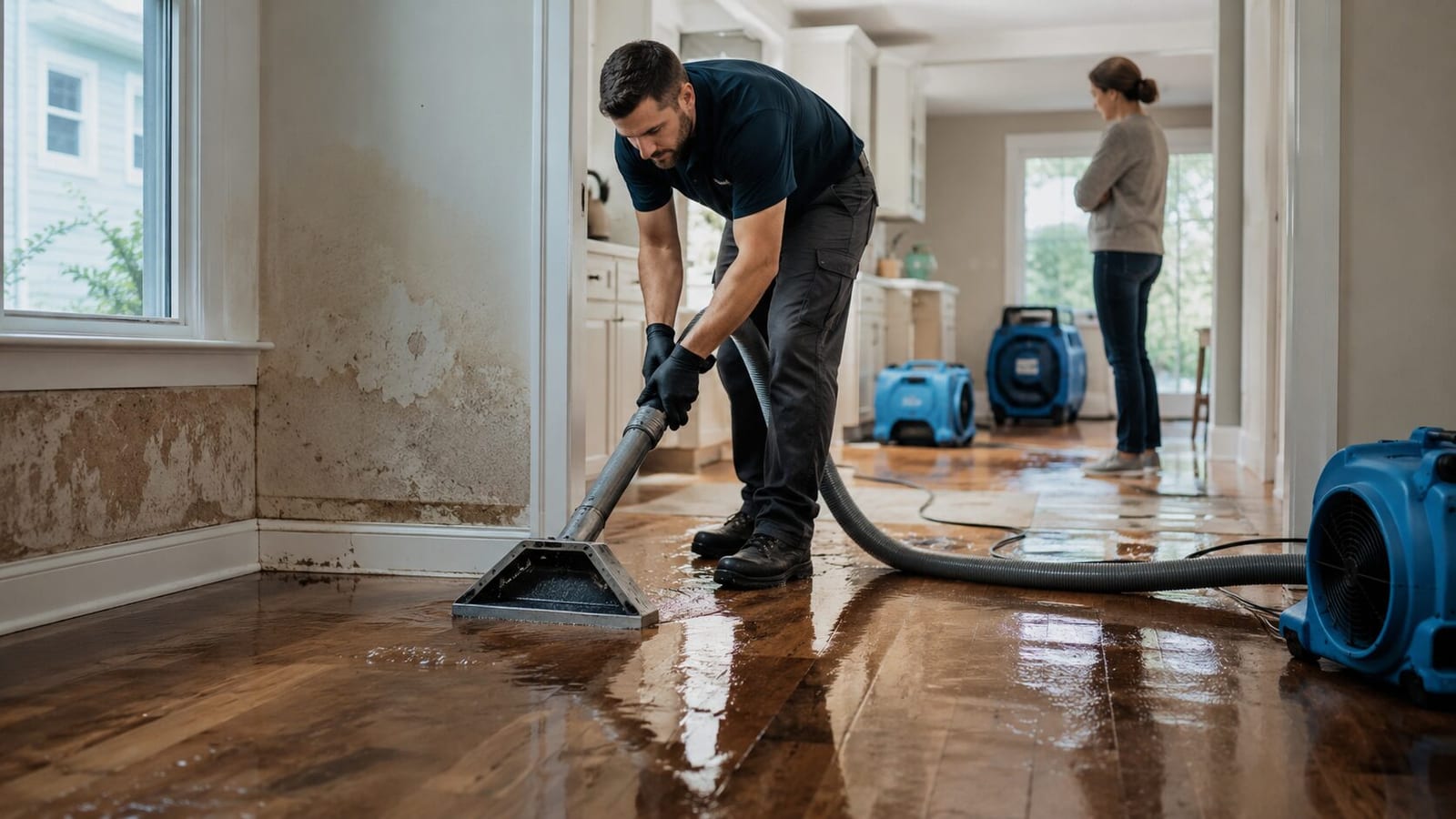
Extraction comes next, pulling standing water out of carpet, pad and hard surfaces. Then comes the part that takes time: controlled structural drying. Air movers keep evaporation going at the material surface while commercial dehumidifiers pull that moisture out of the air so it cannot resettle elsewhere in the house. In a climate as humid as ours, the dehumidification side does the heavy lifting. Our guide to how structural drying works covers this in more detail.
Drying is monitored, not guessed at. A technician returns daily to take readings at the same marked locations and compare them against a dry standard from unaffected material in the same house. Equipment comes out when the numbers say the structure is dry, typically three to five days for a contained loss and longer when water sat for a while or reached hardwood.
What It Costs and Who Pays
Cost depends on how much material got wet, how long it stayed wet, and what category of water you are dealing with. A clean supply line break caught the same day is a very different job from a sewage backup or a roof leak discovered months later, so we give you a written scope after the inspection rather than a number that will not match your house. Our guide to water damage restoration costs in Washington explains what drives the pricing.
On the insurance side, most Washington homeowners policies cover water damage that is sudden and accidental, and exclude damage from long term seepage or deferred maintenance. That distinction is where claims get decided, which is why documented moisture readings from day one matter so much. Our breakdown of water damage coverage goes deeper on the exclusions worth knowing before you file.
We bill your insurance carrier directly and provide the documentation adjusters ask for: photos, moisture logs and line item scope. In practice your out of pocket exposure is usually the deductible rather than the full mitigation invoice. Call (425) 772-9467 and we can talk through your policy before you commit to anything.
When Water Damage Turns Into a Mold Problem
Mold needs moisture, a food source and time. Wet drywall, framing and insulation supply the first two immediately, and time is the only variable you control. Given consistently damp material and normal indoor temperatures, growth can begin within roughly one to two days, which is why speed matters so much in the first phase of a loss.
If you are already seeing discoloration, smelling that earthy basement odor, or noticing allergy symptoms that ease when you leave the house, the situation has moved past drying. Our mold remediation team handles removal under containment, so spores are not spread through the rest of the house.
Rebuilding After the Structure Is Dry
Drying and rebuilding are separate phases, and plenty of homeowners are surprised when the mitigation crew packs up and leaves them with open walls and missing flooring. Using one company for both is simpler, because the people who documented the damage are the people who put it back. We handle the full reconstruction phase, from drywall and paint through flooring, trim and cabinetry, and we pull permits through the City of Everett or Snohomish County as the scope requires. If the damaged area was already due for an update, we price the covered repair and any upgrade you fund yourself separately, so you see exactly where the line falls.
Choosing a Restoration Company in Everett
Ask three questions. Is the company IICRC certified, and will a certified technician actually be on your job? Will they give you daily moisture documentation you can hand to your adjuster? And are they licensed, bonded and insured in Washington, which you can verify through the Department of Labor and Industries in about a minute? Ask about response time too, since many national brands take an Everett call through a dispatch center and hand it to whichever subcontractor is free.
If your home is taking on water right now, do not wait for business hours. Call Turning On Restoration and Remodeling at (425) 772-9467 for 24/7 emergency response in Everett, or reach out through our contact page for a non urgent inspection. We are IICRC certified, licensed, bonded and insured, and we bill your insurance directly.
Related services: water damage restoration and mold remediation, serving Everett and nearby Snohomish County communities.
Need help now?
Our water damage restoration team responds 24/7 throughout Everett and Snohomish County, arrives with commercial extraction and drying equipment, and bills your insurance directly. Call (425) 772-9467.

Written by
Adones Batista · Founder & CEO
Adones Batista is the founder of Turning On Restoration & Remodeling, with over 15 years of hands-on experience in construction, disaster response and insurance restoration across Washington.
More about Adones →Frequently Asked Questions
How fast can you respond to water damage in Everett?+
We answer the phone 24 hours a day and dispatch as soon as you call. Because we are a local company rather than a national call center, you get a real arrival window from the person coordinating your job, not a generic promise. Emergency extraction and drying equipment travels with the crew, so work starts on the same visit.
Does homeowners insurance cover water damage in Washington?+
Most Washington policies cover water damage that is sudden and accidental, such as a burst supply line or a failed water heater. Damage from long term seepage or deferred maintenance is normally excluded, and rising groundwater or flooding requires separate flood insurance. Documented moisture readings from day one are what usually decide a disputed claim.
How long does it take to dry out a house after water damage?+
A contained loss caught quickly usually dries in three to five days with commercial air movers and dehumidifiers running continuously. Losses that sat for days, or that soaked hardwood, plaster or dense assemblies, take longer. Equipment comes out when daily moisture readings match a dry standard taken from unaffected material in the same house, not on a fixed schedule.
Can I dry water damage myself with fans?+
For a small spill on a hard surface, yes. For anything that reached carpet pad, subfloor, drywall or insulation, household fans move air but do not remove moisture from it, so the water relocates elsewhere in the house instead of leaving it. In a humid climate like Everett, dehumidification is the part that actually dries the structure.
How quickly does mold grow after water damage?+
Given wet material and normal indoor temperatures, mold can begin growing within roughly 24 to 48 hours. That short window is why professional drying is treated as an emergency service rather than something that can wait for an adjuster to schedule a visit.
Do you bill my insurance company directly?+
Yes. We invoice your carrier directly and supply the documentation adjusters require, including photographs, daily moisture logs and a line item scope of work. In most cases your out of pocket cost is your deductible rather than the full mitigation bill.
Related Articles

Need Help With Your Property?
Our team is available 24/7 for restoration and remodeling across Washington.
(425) 772-9467