Water in Your Crawl Space? Signs, Risks and Next Steps
Turning On · August 20, 2026 · 9 min read
You lifted the hatch in the hallway closet, pointed a flashlight into the crawl space, and the beam came back off standing water. Or maybe you never looked at all. You just noticed the floors in the back bedroom feel cold and slightly springy, and there is a damp, earthy smell that will not go away no matter how much you clean.
Either way, you are dealing with one of the most ignored problems in Pacific Northwest homes. Crawl spaces here sit in wet ground for much of the year, and when water gets in and stays in, it does not stay under the house. It works its way up into your floors, your insulation, and the air you breathe. Here is what it means, how serious it is, and what a proper fix looks like.
How water gets under your house in the first place
Crawl space water almost never comes from one dramatic event. It usually comes from something small that has been happening for a long time.
The most common source we find is surface water. Gutters that overflow, downspouts that dump right against the foundation, or a yard that slopes toward the house instead of away from it. Over a Puget Sound winter, that water saturates the soil around the foundation and finds its way through the vents or the foundation wall.
The second source is plumbing. A slow supply line drip, a leaking drain from an upstairs bathroom, or a failed water heater can run into the crawl space for weeks before anyone notices, because nothing shows up on the finished floor above.
The third is condensation, and this one surprises people. Warm humid air enters through the foundation vents and hits cold ductwork and cold framing. There is no leak at all, but the wood gets wet anyway. An old, torn, or missing vapor barrier makes it dramatically worse, because ground moisture evaporates straight out of the bare soil.
Knowing which one you have matters, because pumping out the water without fixing the source just buys you a few months.
The warning signs you can spot from inside the house
Most homeowners never go into their crawl space. You do not have to. The house tells you.
Watch for a musty or earthy smell that gets stronger near floor vents or closets on the ground floor. Look for hardwood that is cupping, where the edges of each board sit higher than the middle, or laminate that is lifting at the seams. Notice if the floors over the crawl space feel noticeably colder than the rest of the house, which often means the insulation underneath is wet and has fallen out of the joist bays.
Other tells include condensation on the inside of windows, allergy symptoms that improve when you leave the house, and a spike in your heating bill with no change in habits.
If any of that sounds like your house, get eyes under there before the fall rains start. We are based in Bellevue, so we are usually on site the same day rather than dispatching a truck from Kent or Snohomish County like a lot of our competitors do. Call (425) 772-9467 and we will assess it, document it, and we bill your insurance directly when the loss is covered.
Why a wet crawl space becomes a mold problem
Wood framing is fine at normal moisture levels. Once it stays wet, mold has everything it needs: an organic food source, moisture, darkness, and no air movement. In a vented crawl space in western Washington, that combination can produce visible growth on joists and subfloor in a matter of days, not months.
The part homeowners underestimate is the air. Air in a house moves upward. Warm air escapes through the attic, and replacement air gets pulled in from the lowest point, which is the crawl space. A meaningful share of the air in your living room started underneath your floor. If there is mold growing on the subfloor, its spores are coming up with it.
That is why a wet crawl space is a whole-house air quality issue, not a storage-area issue. It is also why we treat it as a mold remediation job as much as a water damage restoration job when growth is already established.
What a real crawl space restoration looks like
A shop vac and a fan is not a fix. Here is the sequence we follow on a proper job.
First, we stop and identify the water source. Extraction comes second, using pumps and truck-mounted extractors to remove standing water. Then we remove the wet materials: saturated fiberglass insulation, the old vapor barrier, and any debris. Wet insulation holds water against the joists and cannot be dried in place, so it goes.
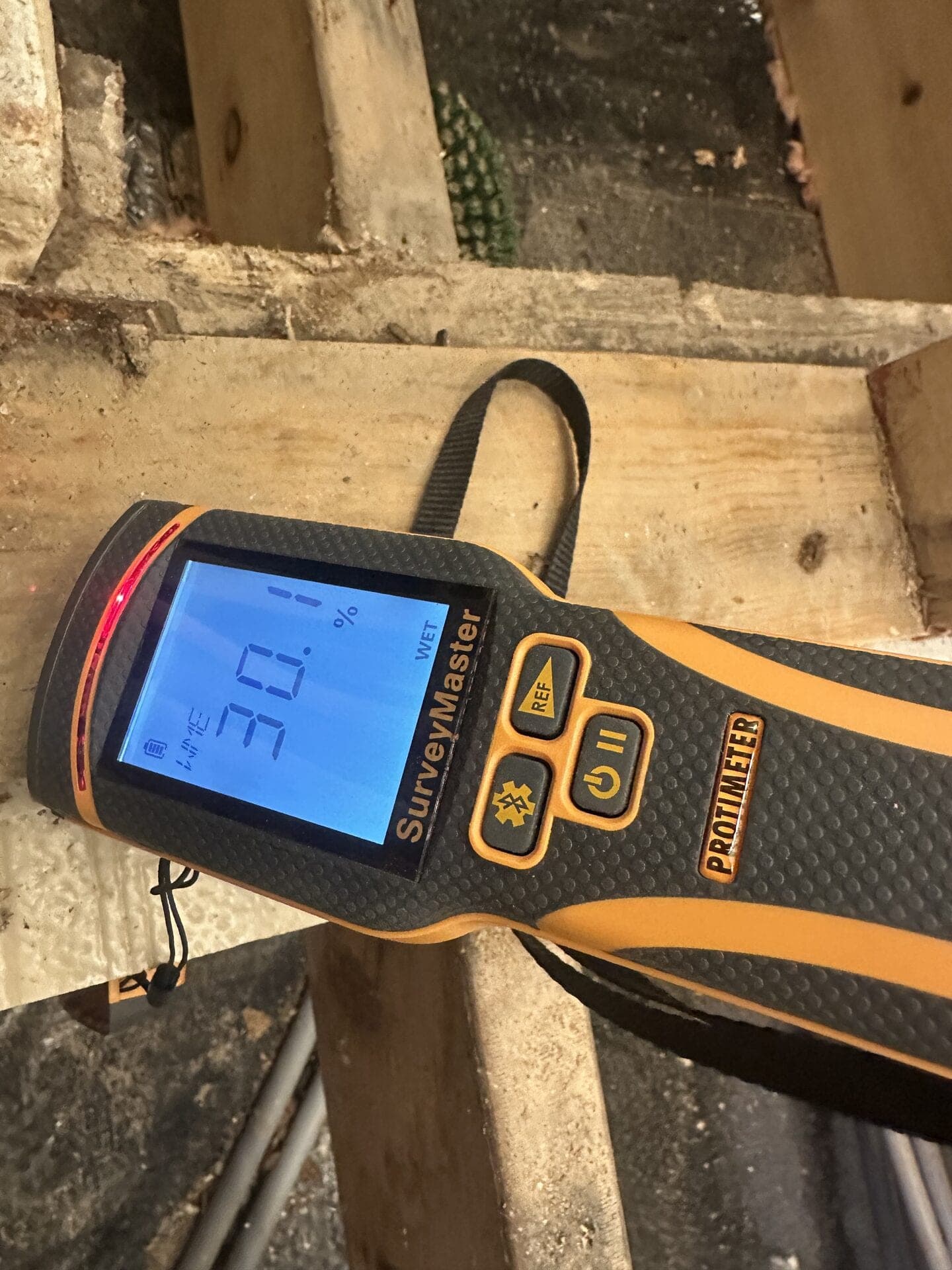
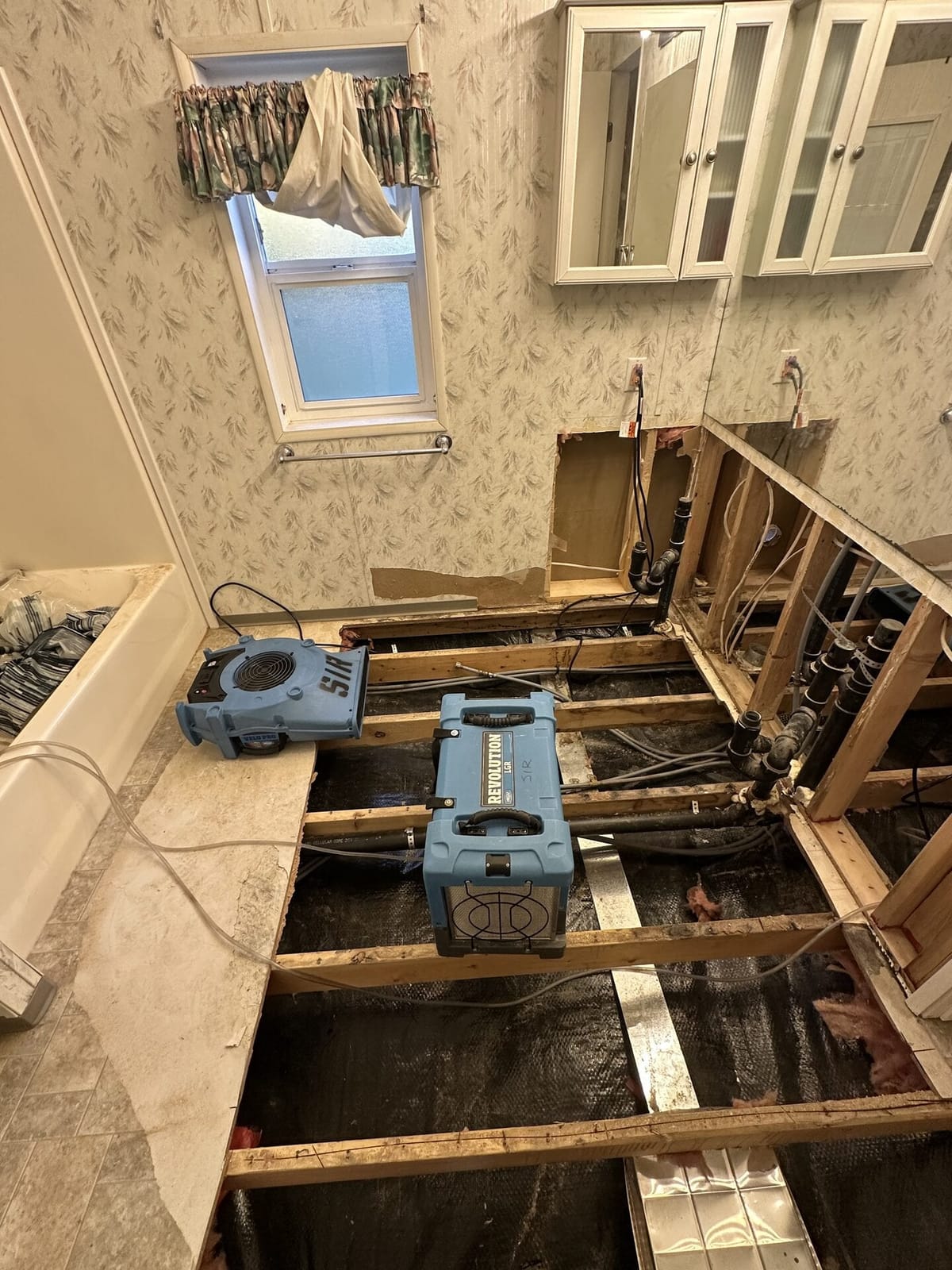
Next comes structural drying. We set commercial dehumidifiers and air movers and we monitor moisture content in the wood with meters, not by feel. The framing has to come back down to a documented dry standard before anything gets closed up. Our structural drying process is the same principle whether it is a crawl space or a finished basement.
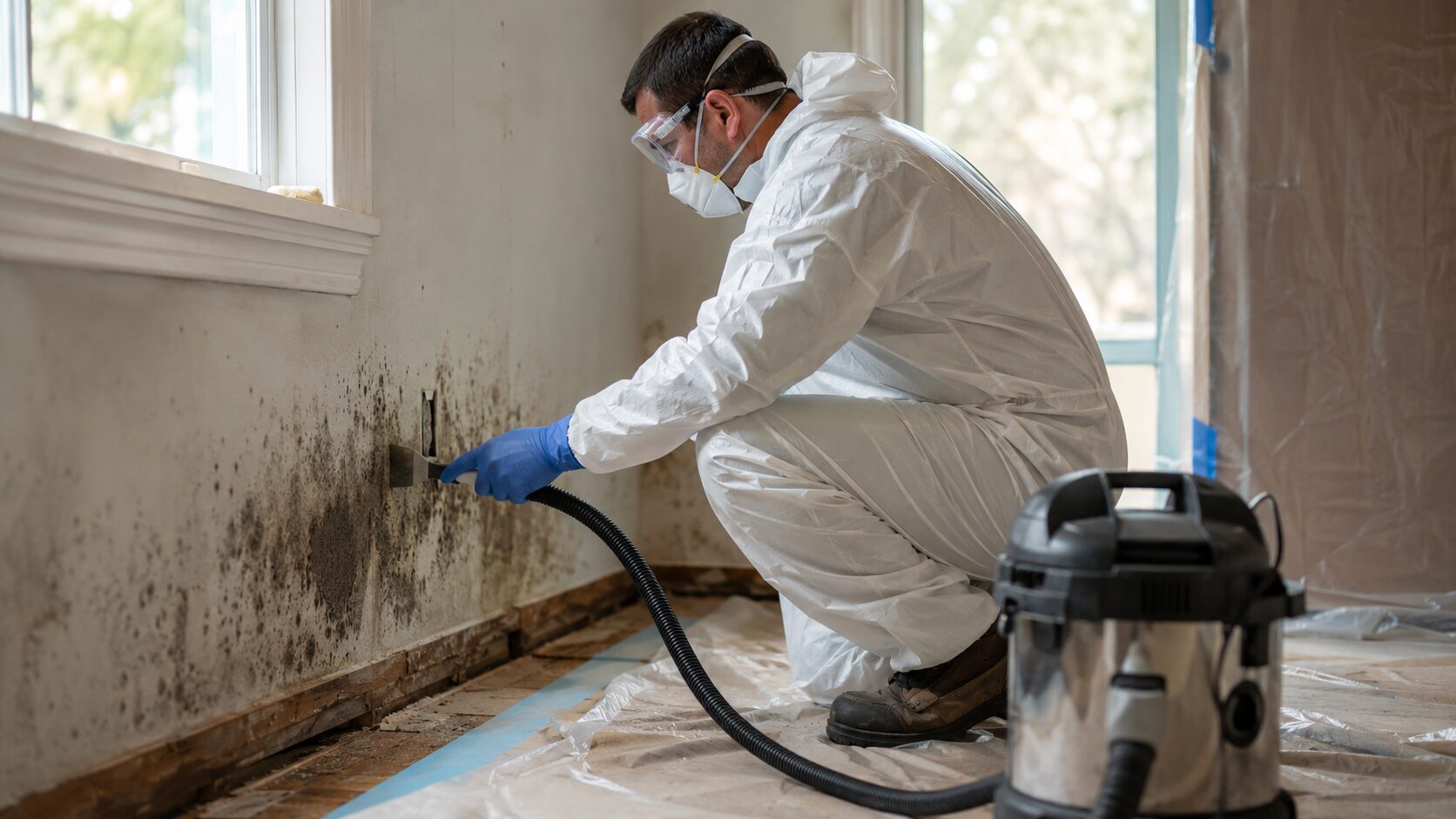
If mold is present, remediation happens while things are open: containment, HEPA filtration, removing or treating affected material, and cleaning the surfaces. Only then do we address the cause, which might mean regrading, extending downspouts, repairing plumbing, sealing the vapor barrier, or in some cases encapsulating the space entirely. Finally, new insulation and a new vapor barrier go in.
Everything gets photographed and documented as we go, which is what makes the difference when the claim gets reviewed. If you want that process started, our crews are available 24/7 at (425) 772-9467, and we bill your insurance directly.
Will insurance cover it?
It depends entirely on the cause, and this is where a lot of homeowners get a surprise.
Sudden and accidental water is generally covered. A pipe that bursts, a water heater that fails, a supply line that lets go: those are the classic covered losses, and the resulting damage to insulation, framing, and subfloor typically comes with it.
Groundwater seepage, surface water, and long-term maintenance issues generally are not covered by a standard homeowners policy. Neither is damage that developed slowly because a leak went unnoticed for months, since most policies exclude gradual damage. Flooding from outside the home usually requires separate flood insurance.
That distinction is exactly why a documented inspection matters. Photos, moisture readings, and a clear cause determination early on are what separate an approved claim from a denied one. Our guide to water damage coverage goes deeper on how adjusters look at these claims.
How to keep it dry going forward
Once the space is restored, keeping it that way is mostly about water management outside the house.
Clean your gutters in late fall after the leaves drop and again in spring. Extend every downspout at least four to six feet from the foundation. Check that the ground slopes away from the house, and keep landscaping and bark mulch from piling up against the foundation vents.
Then look at the crawl space itself twice a year with a flashlight, ideally in November and again in March. You are looking for standing water, torn vapor barrier, sagging insulation, and any discoloration on the wood. Ten minutes twice a year catches problems while they are still cheap. If you would rather build the habit around the seasons, our spring mold prevention checklist pairs well with this.
If your crawl space is already wet, waiting for it to dry out on its own is not a plan. In this climate it will not. Get it assessed, get the source fixed, and get it documented properly. Reach us any time at (425) 772-9467 or through our contact page. We are IICRC certified, licensed, bonded and insured, and we bill your insurance directly.
Related services: Crawl Space Cleanup and Mold Remediation, serving Woodinville and nearby Eastside communities.
Need help now?
Our crawl space cleanup team responds 24/7 across Bellevue and the Eastside, with same-day moisture assessment and direct insurance billing. Call (425) 772-9467.

Written by
Adones Batista · Founder & CEO
Adones Batista is the founder of Turning On Restoration & Remodeling, with over 15 years of hands-on experience in construction, disaster response and insurance restoration across Washington.
More about Adones →Frequently Asked Questions
Is water in a crawl space normal in Washington?+
Damp soil is common in the Pacific Northwest, but standing water is not normal and should not be ignored. A properly built crawl space with a sealed vapor barrier and good drainage stays dry even through a wet winter. Pooled water means water is entering faster than it can drain, and it will lead to mold and rot if the source is not corrected.
How much does crawl space water damage restoration cost?+
Cost depends on the size of the crawl space, how much water is present, whether mold has developed, and how much insulation and vapor barrier needs replacing. A small extraction and drying job is far less involved than a full remediation with encapsulation. We provide a written estimate after an on-site moisture assessment, and when the loss is covered we bill your insurance directly.
How long does it take to dry out a wet crawl space?+
Extraction usually happens the same day. Structural drying typically runs three to five days with commercial dehumidifiers and air movers, though heavily saturated framing can take longer. We confirm completion with moisture meter readings on the wood rather than guessing, because closing up a crawl space that is still wet restarts the whole problem.
Can mold in a crawl space affect the air upstairs?+
Yes. Air naturally moves upward through a house, and replacement air gets drawn in from the lowest point, which is the crawl space. Mold spores and musty odors travel with that air into your living areas. This is why a crawl space mold problem often shows up first as a smell or as allergy symptoms inside the home.
Does homeowners insurance cover a wet crawl space?+
Sudden and accidental water, such as a burst pipe or failed water heater, is generally covered. Groundwater seepage, surface water, and gradual damage from a long-unnoticed leak are usually excluded, and outside flooding typically requires separate flood insurance. Because coverage turns on the cause, early documentation with photos and moisture readings matters a great deal.
Should I remove wet insulation from my crawl space?+
Wet fiberglass insulation cannot be dried in place. It holds moisture directly against the floor joists, loses nearly all of its insulating value, and becomes a growth surface for mold. It should be removed and replaced after the framing has been dried to a verified moisture level, not left in the joist bays to dry on its own.
Related Articles
Need Help With Your Property?
Our team is available 24/7 for restoration and remodeling across Washington.
(425) 772-9467