Home Restoration in Bellevue, WA: Your Complete Guide
Turning On · August 12, 2026 · 9 min read
It usually starts small. A ceiling stain in the hallway that was not there last week. A smell in the laundry room you keep telling yourself is just the machine. A scorched outlet behind the dresser. By the time most Bellevue homeowners pick up the phone, the problem has already been working quietly behind the drywall for a while.
Home restoration is what happens next: the process of taking a house that has been damaged by water, fire, smoke or mold and putting it back the way it was, or better. It is not the same as remodeling, and it is not the same as a handyman patch. This guide walks through how it actually works in Bellevue, what the timelines look like, how insurance fits in, and what separates a restoration company worth hiring from one that will leave you with a half finished job.
What home restoration actually covers
People use the word loosely, so it helps to be specific. A full restoration service usually breaks into three phases.
- Mitigation. The emergency work in the first hours and days. Stopping the source, extracting water, setting containment, removing unsalvageable material, and getting the structure dry and stable.
- Remediation and cleaning. Treating what is left behind. Antimicrobial application, soot and odor removal, air scrubbing, content cleaning.
- Reconstruction. The rebuild. Drywall, insulation, paint, flooring, trim, cabinets, and whatever else came out during mitigation.
Those three phases are often handled by three different companies, and that is where homeowners get stuck. The mitigation crew rips out the wet drywall, disappears, and then nobody rebuilds. We handle all three under one roof, which means one point of contact and one schedule from the day of the loss to the day you get your house back. If you want the difference explained in more depth, we wrote about it in mitigation, restoration and reconstruction.
Being based in Bellevue is not a marketing line
A lot of restoration companies advertise Bellevue and then dispatch a truck from Kent, Seattle or Snohomish County. On a Tuesday at 2pm that costs you thirty minutes. During an atmospheric river in December, when every crew on the Eastside is already committed, it can cost you a full day. Water does not wait for traffic on I-405.
Turning On Restoration and Remodeling is based in Bellevue. Our crews live and work here, which is why we can be at a house in Somerset, Lake Hills, Newport, Bridle Trails, Crossroads or West Bellevue quickly instead of eventually. We are IICRC certified, licensed, bonded and insured, and we answer the phone 24/7 at (425) 772-9467. We also bill your insurance directly, so you are not fronting the cost of an emergency you did not ask for.
Water damage: the first 48 hours decide the cost
Most restoration work in Bellevue starts with water. Supply line failures under sinks, water heaters that give out in their twelfth year, dishwasher hoses, and the classic Pacific Northwest problem of a clogged gutter sending roof runoff straight down the side of a foundation.
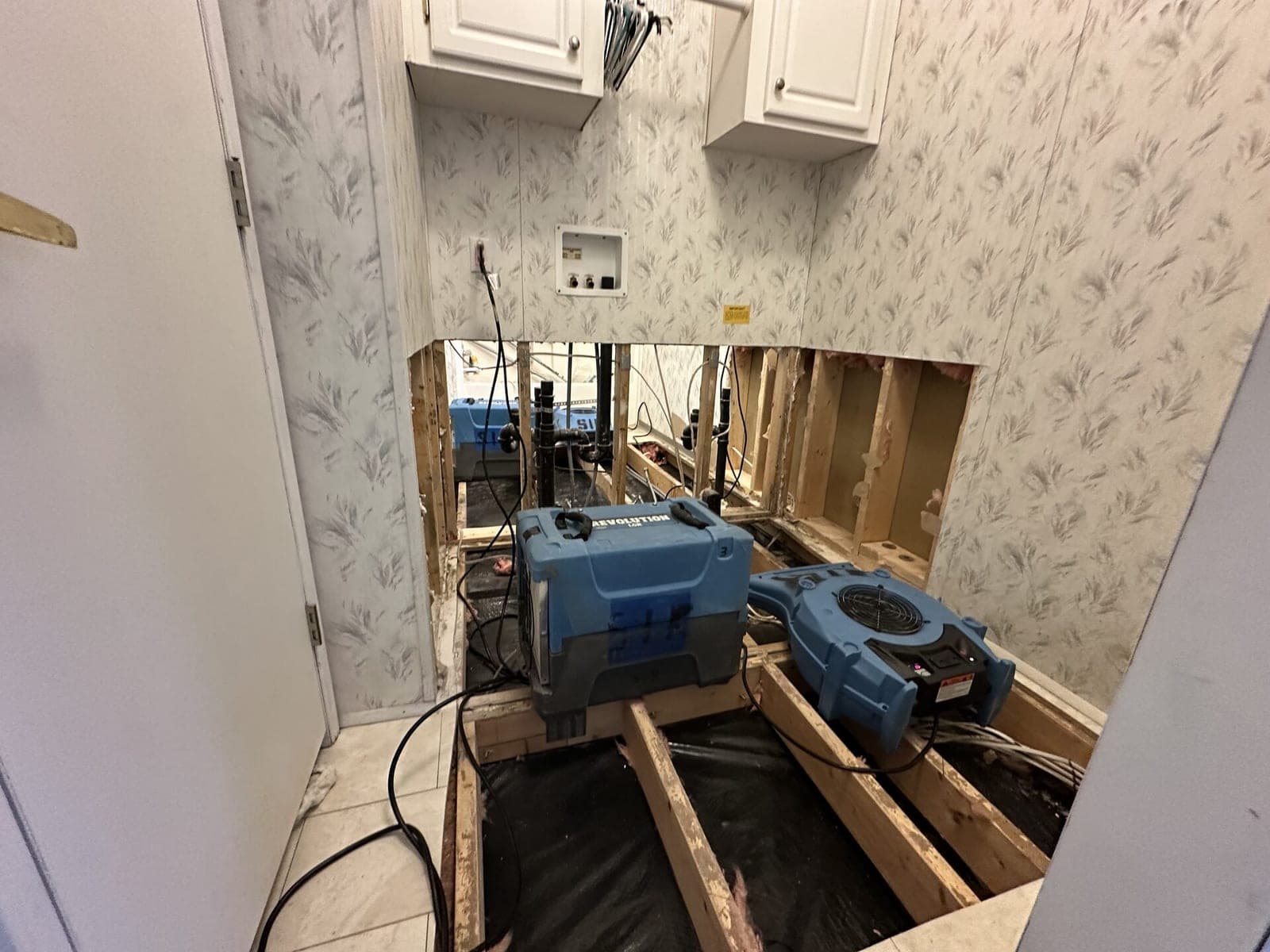
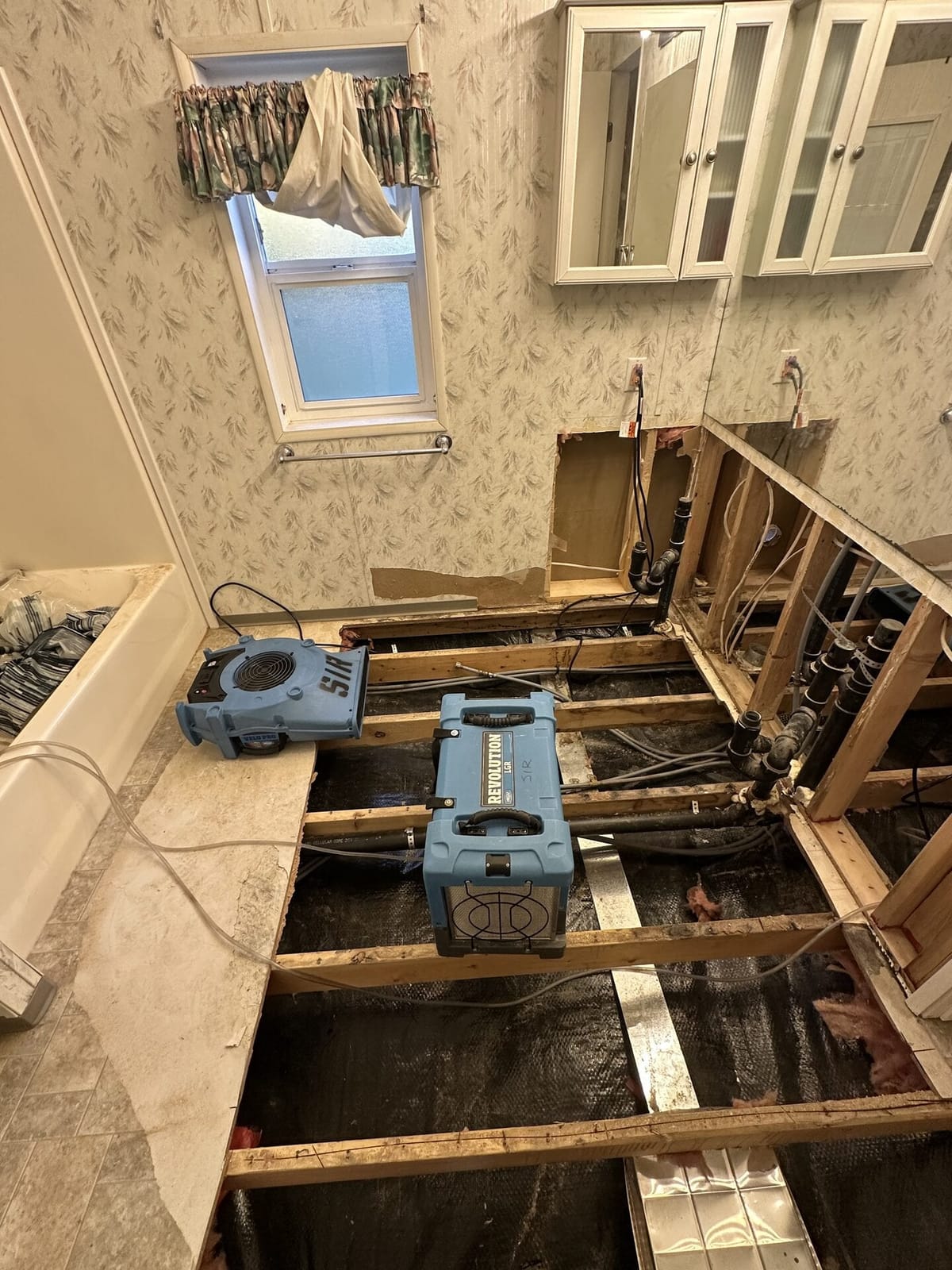
What matters is how fast the drying starts. Wet drywall and framing are not automatically a loss. Given enough airflow, dehumidification and monitoring, a lot of material can be dried in place and saved. Wait too long and the same wall has to come out entirely, which turns a mitigation job into a reconstruction job. That is the single biggest lever a homeowner controls on the final bill.
Our water damage restoration process starts with moisture mapping so we know exactly how far the water traveled, then structural drying with meters checked daily until the readings come back to normal. Not a guess, not a calendar, actual readings. If you are in the middle of it right now, read what to do immediately after water damage while you wait for us.
Standing water in your house right now? Call (425) 772-9467. We respond 24/7 across Bellevue and the Eastside, and we bill your insurance directly so you can focus on your family instead of paperwork.
Fire and smoke: the damage keeps working after the flames stop
People assume the worst part of a fire is what burned. Usually it is what did not. Smoke residue is acidic and it keeps eating at metal, finishes and plastics for days. Odor migrates into insulation, ductwork, carpet padding and framing, and it will come back every humid day for years if it is not treated properly. On top of that, the water used to put the fire out is now a second, separate water loss.
Effective fire damage restoration means sequencing all of it: securing and boarding the structure, addressing the water, then soot removal, thermal fogging or hydroxyl treatment for odor, sealing what needs sealing, and only then rebuilding. Skip a step and the smell tells on you six months later.
Mold: what our climate does to a wall that stayed wet
Bellevue gives mold everything it needs. Long wet seasons, mild temperatures, and a lot of tightly sealed homes with limited ventilation. Mold does not need a flood. A slow supply line drip behind a vanity or a bathroom fan that vents into the attic instead of outside is plenty.
Real mold remediation is not spraying bleach on a surface. It is containment with negative air pressure so spores do not spread to clean rooms, HEPA filtration, physical removal of affected material, and then fixing the moisture source. If the source stays, the mold comes back, every time. We covered the warning signs in signs of mold in your home.
How the insurance side actually works
Most homeowners policies in Washington cover sudden and accidental damage: a pipe that bursts, a water heater that fails, a fire. What they generally do not cover is long term seepage, gradual deterioration or deferred maintenance. That distinction is why documentation from day one matters so much.
We photograph everything before we touch it, log moisture readings daily, and write estimates in the format adjusters expect. Then we bill your insurance directly, so the check flow is between us and the carrier instead of running through your bank account. For more detail, see does insurance cover water damage.
One thing worth knowing: your policy almost certainly requires you to take reasonable steps to prevent further damage. Calling a restoration company quickly is not just cheaper, it protects your claim.
Then comes the part most companies skip
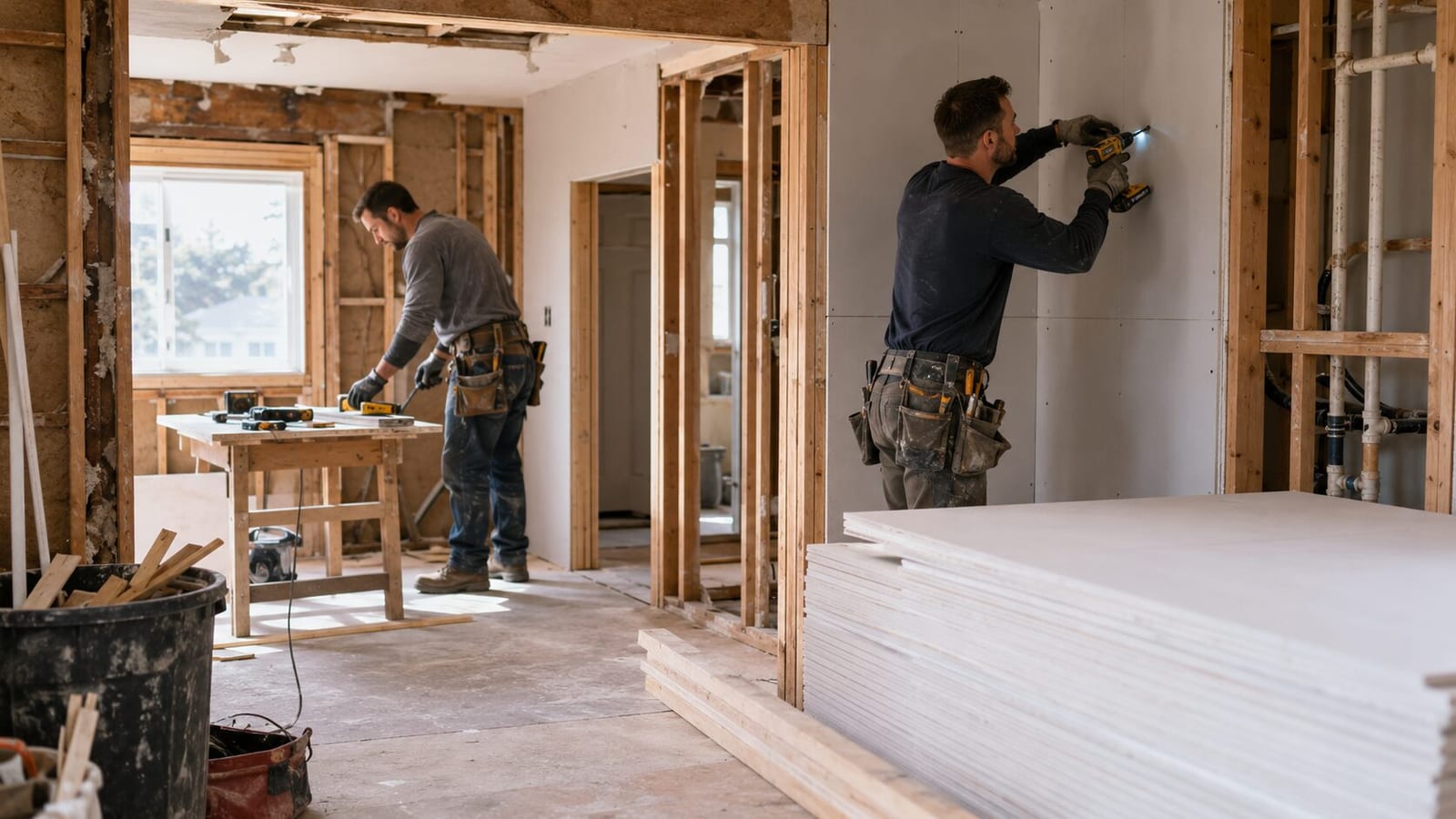
Drying a house is not finishing a house. Once the structure is dry and clean, somebody has to put the drywall back, match the texture, repaint, reinstall flooring, rebuild the vanity or the kitchen run that came out. That is reconstruction, and it is where a lot of homeowners end up stranded with a plastic sheet where their bathroom used to be.
Because we also do home remodeling, our reconstruction crews are the same people who build kitchens and baths every week. A fair number of our clients use the rebuild as a chance to upgrade while the walls are already open, which is often the most cost effective remodel they will ever do. You can see finished work on our projects page.
How to choose a restoration company in Bellevue
Four questions will tell you most of what you need to know. Are you IICRC certified? Are you licensed, bonded and insured in Washington? Do you handle the rebuild too, or just the demo? And where does your crew actually dispatch from? A company that hesitates on any of those is a company that will hand you off to a subcontractor.
If something has gone wrong in your home, call (425) 772-9467 or reach us through our contact page. We are local, we answer at any hour, and we bill your insurance directly.
Related services: water damage restoration and reconstruction, serving Bellevue and nearby Eastside communities.
Need help now?
Our restoration team responds 24/7 across Bellevue and the Eastside, arrives with drying equipment on the truck, and bills your insurance directly. Call (425) 772-9467.

Written by
Adones Batista · Founder & CEO
Adones Batista is the founder of Turning On Restoration & Remodeling, with over 15 years of hands-on experience in construction, disaster response and insurance restoration across Washington.
More about Adones →Frequently Asked Questions
How long does home restoration take in Bellevue?+
Drying a typical water loss takes three to five days once equipment is running. Cleaning and remediation add a few days more. Reconstruction depends on scope, from about a week for a single room to several weeks for a kitchen or multiple floors. We give you a schedule after the first inspection rather than a guess over the phone.
Does homeowners insurance cover home restoration?+
Most Washington policies cover sudden and accidental damage such as a burst pipe, a failed water heater or a fire. Gradual leaks, long term seepage and deferred maintenance are usually excluded. We document the loss from the first visit and bill your insurance directly, which helps the claim move faster.
What is the difference between restoration and remodeling?+
Restoration returns a damaged home to its pre-loss condition and is typically paid through an insurance claim. Remodeling changes a home by choice and is paid by the homeowner. Since we do both, many clients upgrade finishes during the rebuild while the walls are already open.
How fast should a restoration company respond to an emergency?+
Within a couple of hours, at any hour. Water spreads through drywall, insulation and subfloor continuously, and mold growth can begin within roughly 24 to 48 hours in damp conditions. Because we are based in Bellevue rather than dispatching from Seattle or Kent, we reach Eastside homes quickly.
Do I need to move out during restoration?+
Often no. For a contained water loss we set up containment and keep the rest of the house livable. Fire losses, large mold jobs and anything affecting the kitchen or the only bathroom usually do require temporary housing, which many policies cover under loss of use.
What does IICRC certified mean and why does it matter?+
The IICRC sets the industry standards for water damage restoration, mold remediation and fire cleanup. A certified company follows documented drying and containment protocols, which insurance adjusters recognize. It is one of the first things you should ask any contractor before signing.
Related Articles
Precisa de Ajuda Com o Seu Imóvel?
A nossa equipe está disponível 24/7 para restauração e remodelação em todo o Washington.
(425) 772-9467